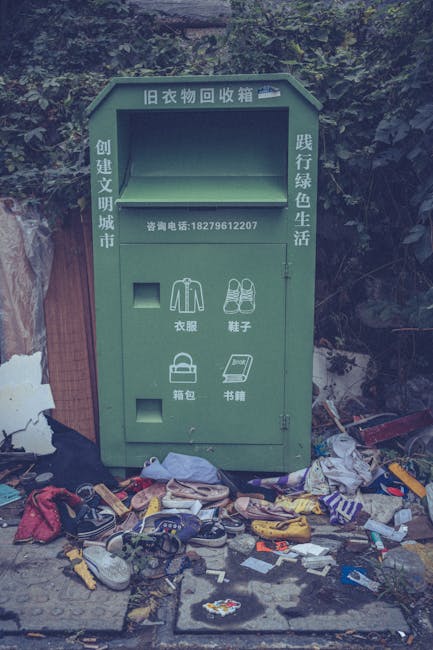
Why donating damaged goods can lead to legal and ethical issues
Donating items you no longer need can feel like the right thing to do. It clears space, helps someone else, and keeps usable items out of landfill. But there is a line that gets crossed more often than people realise. Once an item is broken, unsafe, contaminated, or misleadingly described, donating it can create legal and ethical issues that affect the charity, the donor, and sometimes the person who receives it. In plain English: giving away rubbish and calling it charity is not generosity, it is a problem waiting to happen.
This article explains where those risks come from, what usually goes wrong, and how to make better decisions before you hand anything over. You will also find a practical checklist, a comparison table, and a realistic example so you can judge whether an item should be donated, repaired, recycled, or disposed of properly. If you are sorting a house, clearing a loft, or emptying out a garage, the right choice really does matter.
Quick takeaway: if an item is damaged enough to be unsafe, unsellable, unhygienic, or likely to mislead the next user, donation may do more harm than good. In that case, proper disposal or specialist clearance is usually the fairer route.
For larger clear-outs, it can help to think beyond the donation bin and look at proper clearance routes such as house clearance, furniture disposal, or waste removal depending on what you are dealing with. That way, the items are handled in a way that fits their condition, not just your intention.
Table of Contents
- Why this matters
- How the problem happens
- Why people still consider donating damaged goods
- Who needs to pay attention
- How to decide what to do next
- Expert tips for making the right call
- Common mistakes to avoid
- Tools and practical resources
- Law, compliance and best practice
- Donation vs repair vs disposal
- Real-world example
- Checklist
- Conclusion
- Frequently Asked Questions
Why this matters
Most people think of donation as a harmless choice. A chair with a wobble, a toaster that only works sometimes, or a box of mixed household items can feel "good enough" to pass on. But donation is not just about getting rid of something. It transfers responsibility to another person or organisation, and that transfer can be unfair if the item is not fit for use.
The legal risk tends to show up when the item creates danger, damages someone else's property, or is misdescribed. Imagine donating a desk lamp with frayed wiring, then discovering it was sold and used in a home. That is not merely careless. It can become a safety issue. The ethical problem is just as important: charities and reuse shops spend time, money, and storage space dealing with items they cannot actually pass on. That diverts resources away from the people they are trying to support.
There is also a reputational side to this. A donor may think, "Well, at least I didn't throw it in the skip." Yet if the item is too damaged to be reused, handing it over can shift the burden onto someone else. To be fair, it is easy to make this mistake when you are in a rush. Most people are not trying to be difficult. They just want the room cleared and the job done by tea time. Still, good intentions do not fix a broken table leg or a mouldy mattress.
If you are clearing a property after a move, a tenancy end, or a bereavement, the issue becomes even more sensitive. Items may be old, mixed, or stored for years in a loft or garage. In those situations, services like flat clearance, loft clearance, or garage clearance can help separate what is genuinely reusable from what is not.
How the problem happens
The issue usually starts with a simple assumption: "Someone else might still want this." Sometimes that is true. Other times it is wishful thinking. A donation becomes problematic when the donor does not properly check the item's condition, clean it, test it, or describe it accurately. A charity shop or reuse organisation may accept it at the door, only to find the damage later. Then the item has to be stored, repaired, stripped for parts, or disposed of. That takes time and money.
There are a few common ways this plays out:
- Safety hazards: broken frames, unstable furniture, cracked casings, exposed wires, sharp edges, or contaminated fabric.
- Hidden damage: damp, smoke damage, pest damage, mould, or water ingress that is not obvious at first glance.
- Misleading description: calling something "working" when it only works intermittently, or saying "good condition" when the item needs repair.
- Hygiene problems: mattresses, cushions, soft furnishings, and kitchen items that cannot be cleaned properly.
- Compliance issues: electrical goods, upholstered items, or items requiring specific handling that should not just be dropped off casually.
Think about a chair with a split seat and loose screws. It might look acceptable in a photo taken from one angle. In a charity warehouse, though, someone may need to inspect it, decide whether it is safe, then spend additional time trying to repair or recycle it. If they cannot, they may be left with disposal costs. That is where the ethical problem lands squarely on the donor's shoulders.
In business settings, the stakes can be higher. An office might clear out desks, chairs, filing cabinets, and old equipment during a refurbishment. If the items are damaged and dumped in the donation pile without proper sorting, the result can be messy. In that case, a more controlled route like office clearance or business waste removal is often more sensible.
Why people still consider donating damaged goods
It is worth saying this clearly: people usually do not donate damaged goods because they are trying to cause trouble. There are a few understandable motives behind it.
- They want to avoid waste. Nobody likes throwing away something that still looks vaguely useful.
- They want to do the "right" thing. Donation feels better than disposal, even when the item is borderline.
- They may not know the item is damaged. Some faults are hidden until the item is moved or tested.
- They are short on time. During a house move or clearance, decisions happen fast. Too fast, sometimes.
- They hope repair is possible. And yes, occasionally it is.
There can be genuine advantages to donation when an item is only lightly worn and still safe. It may reduce waste, support local community projects, and make use of something that would otherwise sit unused. That part is real. The problem begins when "lightly worn" becomes "borderline unusable" and the item is passed on anyway.
When done properly, reuse is a good thing. It supports a more circular approach to household items and can reduce pressure on disposal routes. That is why many people also look at services such as recycling and sustainability when deciding what to do with unwanted goods. But reuse only works when the goods are actually suitable for reuse. Simple as that.
Who this is for and when it makes sense
This topic matters to almost anyone who clears out their home now and then, but some groups need to be especially careful.
Homeowners and renters
If you are clearing cupboards, moving house, or doing a spring clean, you may find items that are technically there but not really usable anymore. A blanket with tears, a side table with missing screws, a microwave that sparks, or a bedside cabinet with water damage should not be treated the same way as a clean, functional item.
Families handling bereavement or downsizing
These situations often involve lots of mixed items and very little time. There is emotional pressure to "do something useful" with everything. That is understandable, but not every item is suitable for donation. Some are better sorted into resale, recycling, or disposal. There is no shame in that.
Landlords and letting agents
When a property is emptied after a tenancy, the contents may include damaged furniture, broken appliances, or abandoned household waste. Passing those on to a charity without checking condition can create avoidable problems. You also risk leaving the next person to deal with a mess you already knew about.
Businesses and offices
Office equipment can be tricky because some items look presentable but are no longer safe or fit for use. A chair with a broken armrest is one thing; damaged electrical items are another. If you are clearing stock, desks, or equipment, the line between donation and disposal needs a sensible check.
Builders and trades
Not everything left after a project is "donatable". Offcuts, damaged fixtures, weathered fittings, and contaminated materials need proper handling. In those cases, a dedicated route such as builders waste clearance is usually the better option.
Step-by-step guidance
Here is a practical way to decide what to do. No fuss, no guesswork.
- Inspect the item honestly. Check for cracks, missing parts, sharp edges, mould, stains, instability, or electrical faults. Do not just glance at it from across the room.
- Test whether it actually works. Plug it in, sit on it, open and close it, or move it the way a recipient would. If it fails under normal use, donation may not be appropriate.
- Ask whether it could be dangerous. Would you let a friend use it without warning? If the honest answer is no, that tells you something.
- Consider cleanability. Some items can be cleaned properly. Others cannot. Once contamination, mould, or pests are involved, the ethical case for donation gets very weak.
- Think about the recipient. A donation should be a benefit, not a problem passed down the line.
- Decide between reuse, repair, recycling, or disposal. Light damage may be repairable. Serious damage usually means disposal or specialist recycling.
- Document where needed. For business items, keep an internal record of what was removed and why. It helps with accountability and avoids confusion later.
A useful rule of thumb: if the item needs more than a minor fix before anyone else could use it safely, it is probably not a donation item yet. That little "yet" matters. Some goods can be repaired. Others cannot.
If you are clearing a whole room or a cluttered property, a mixed approach often works best. Keep the reusable items separate, then deal with the rest through furniture clearance, home clearance, or furniture disposal as needed. It keeps the process cleaner and less stressful.
Expert tips for better results
In our experience, the best decisions come from slowing down for five minutes before the van arrives or the charity shop opens. That tiny pause can save a lot of trouble.
- Separate "usable" from "repairable" immediately. Do not mix them in the same pile.
- Be strict with soft furnishings. If an item smells damp, looks stained, or has a suspicious patch of black mould, do not donate it.
- Check stability first, appearance second. Something can look fine and still be unsafe.
- Use clear language. If you are offering items to a charity or reuse group, describe faults plainly.
- Keep a small repair threshold. If a fix is simple, cheap, and safe, repair may make sense. If not, stop there.
- When in doubt, choose disposal over passing on risk. That may feel less satisfying, but it is usually the fairer decision.
One practical observation: a lot of "damaged" items are not badly damaged, just awkward. A dining chair with loose screws can be fixed. A sofa with structural sag, torn fabric, and lingering smells is a different story altogether. Let's face it, no one wants to sit on a mystery.
For clarity and peace of mind, it also helps to understand how a responsible provider operates. Pages like insurance and safety, health and safety policy, and terms and conditions can give you a sense of how a professional service approaches risk and responsibility.
Common mistakes to avoid
People tend to make the same few mistakes here, and they are easy to miss when you are busy.
- Assuming "free" means "acceptable". Free does not mean safe, clean, or lawful.
- Sending damaged electricals to donation. Anything with wiring or batteries deserves a proper check.
- Hiding faults. A dent, crack, wobble, or stain does not become less real because you keep quiet about it.
- Donating item sets with missing pieces. A table without legs or a toy without key parts is often just clutter in a nicer wrapper.
- Leaving the charity to sort the problem. That is the ethical issue in one sentence, really.
- Donating contaminated items after a quick wipe-down. Sometimes that is nowhere near enough.
Another common one: people save items in the loft for years and assume they are still suitable because they have "barely been used." Time changes things. Damp creeps in. Fabric degrades. Metal corrodes. Materials age quietly, and then suddenly they do not.
If the clearing job is larger than a few bags, it may be worth looking at dedicated services such as loft clearance or garage clearance so the decision-making happens as part of the clearance, not after the pile has already grown.
Tools, resources and recommendations
You do not need specialist equipment to make a decent decision, but a few simple tools help.
- A torch: for checking dark corners, hidden stains, and underside damage.
- A screwdriver or small tool kit: useful for tightening fittings and testing whether a wobble is fixable.
- Gloves: sensible for dirty, sharp, or potentially contaminated items.
- A camera or phone: for recording condition before disposal, donation, or collection.
- Labels or sticky notes: helpful when sorting "donate", "repair", "recycle", and "dispose".
There are also practical service pages worth reviewing when your items are part of a larger clear-out. For example, if you are emptying a family property, house clearance and furniture clearance can help you separate furniture from general waste. If you are dealing with a business premises, business waste removal may be the better fit.
And for anyone trying to keep things above board, it is worth understanding how a provider handles payments, privacy, and complaints. Those details are not glamorous, sure, but they matter. A service that is open about payment and security, privacy policy, and complaints procedure tends to be easier to trust.
Law, compliance, standards, and best practice
This is the part people often skip, then regret later. While everyday donations are usually informal, they still sit within a broader framework of duty of care, consumer fairness, product safety, and waste handling expectations. The exact legal position depends on what the item is, how damaged it is, who receives it, and whether it is later sold or reused.
Some general best-practice principles are worth following in the UK:
- Do not pass on items you know are unsafe.
- Describe condition honestly.
- Keep damaged or contaminated items out of reuse streams.
- Use proper disposal routes for waste-like material.
- For businesses, keep internal records and clear handover decisions.
For upholstered furniture, electrical goods, and items that may carry hygiene or safety concerns, the standard should be higher, not lower. A charity, reuse shop, or recipient should not need to become an inspector just to accept your item. That is one of the clearest ethical lines.
If you want a responsible route for mixed materials, then sustainability still matters. Good disposal is not the enemy of environmental care. In fact, it often supports it. Sorting items properly, recycling what can be recycled, and avoiding the misuse of donation channels are all part of doing the job well. For a broader view of responsible handling, see recycling and sustainability.
Options, methods, or comparison table
Sometimes the easiest way to decide is to compare your options side by side. Here is a practical view of what usually makes sense.
| Option | Best for | Pros | Risks |
|---|---|---|---|
| Donate | Clean, safe, functional items | Supports reuse and reduces waste | Can burden the recipient if damage is hidden |
| Repair then donate | Items with minor, fixable faults | Can extend item life and improve value | Repairs may cost more than replacement |
| Recycle | Items unsuitable for direct reuse but recyclable | Reduces landfill and recovers materials | Not every item can be recycled easily |
| Dispose properly | Unsafe, contaminated, or beyond repair items | Removes risk and keeps responsibility clear | May feel less rewarding emotionally |
A small but useful point: donation and disposal are not moral opposites. Sometimes disposal is the ethical choice because it avoids passing risk to another person. That is not failure. That is judgement.
Case study or real-world example
Here is a typical scenario. A family clears out a spare room after a move. They find an old armchair, a bedside lamp, a kettle, and a small bookshelf. At first glance, everything looks donation-worthy. But once they check properly, the armchair has a broken spring, the lamp has a loose cable, the kettle cuts out intermittently, and the bookshelf wobbles under light pressure.
Now, none of those problems sounds dramatic on its own. Yet together they create a bundle of risk. The armchair is uncomfortable and structurally poor. The lamp may be unsafe. The kettle could fail in someone else's kitchen. The bookshelf might topple. So what looked like a neat donation pile is actually a collection of items that would likely cost the receiver time and money.
In that situation, the family has a better choice. The lamp and kettle might be treated as electrical waste if they cannot be repaired safely. The bookshelf might be dismantled for materials. The chair may need disposal rather than reuse. A handful of items, yes, but handled properly. The room gets cleared, the burden is not shifted onto someone else, and nobody is left dealing with an awkward complaint later.
That is the real-world difference between goodwill and guesswork. It is often only visible once you pause and inspect the item properly. Funny how that works.
Practical checklist
Use this quick checklist before you donate anything damaged or possibly damaged.
- Is the item safe to use right now?
- Are all essential parts present?
- Does it work as intended under normal use?
- Is there any sign of mould, damp, pests, smoke damage, or contamination?
- Would you feel comfortable using it yourself or giving it to a friend?
- Have you described the condition honestly?
- Would a charity or reuse shop reasonably be able to resell it?
- Would repair take only a minor fix, or is it already beyond sensible reuse?
- If in doubt, have you chosen recycling or disposal instead?
If you can answer "no" to several of those questions, the item probably should not be donated. That is the blunt version. And sometimes the blunt version is the useful one.
For bigger projects, a structured clearance approach can make this much easier. Services such as furniture clearance and waste removal help remove uncertainty and keep the process moving.
Get a free quote today and see how much you can save.
Conclusion
Donating damaged goods can lead to legal and ethical issues because the act of donating does not erase the item's condition. If something is unsafe, unhygienic, misleadingly described, or clearly beyond sensible reuse, handing it on can shift risk to someone else and place extra work on the organisation receiving it. That is where good intentions stop being enough.
The safest approach is straightforward: inspect honestly, separate repairable items from unsafe ones, and choose donation only when the item truly deserves a second life. If it does not, use repair, recycling, or proper disposal instead. That way, you protect others, respect the receiving organisation, and avoid creating a problem dressed up as generosity.
And honestly, that is better for everyone. A clear space is nice, but a clear conscience is nicer.
Frequently Asked Questions
Can I donate damaged goods if I think someone might still want them?
Only if the item is still safe, functional, and honestly described. If the damage affects safety, hygiene, or basic use, it is usually better to repair, recycle, or dispose of it properly.
What counts as "damaged" enough that I should not donate it?
There is no single universal line, but common examples include broken structure, exposed wires, mould, persistent smells, contamination, missing essential parts, or faults that make the item unsafe or unusable.
Is it unethical to donate something that just needs a small repair?
Not necessarily. A minor, clearly disclosed fault can be acceptable if the receiving organisation is happy to take it. The key is honesty and whether the item is still genuinely suitable for reuse.
Can charities refuse damaged items?
Yes. Many charities and reuse organisations will refuse items that are unsafe, dirty, too damaged, or costly to handle. That is normal and sensible.
Could I be legally responsible if a donated item harms someone?
In some situations, yes. Responsibility can depend on the item, what you knew about its condition, and how it was passed on. If in doubt, do not donate items that could create a safety issue.
What should I do with an item that is not safe to donate but still has some value?
Consider repair, component recovery, recycling, or specialist disposal. Sometimes a damaged item still has parts that can be salvaged even if the whole item should not be reused.
Are electrical items especially risky to donate if damaged?
Yes. Electrical goods deserve extra caution because hidden faults can create fire or shock risks. If there is any doubt, do not donate them as working items.
What about furniture with stains or smells?
If the stains or smells are mild and fully removable, the item may still be reusable. If they suggest damp, smoke, pests, or contamination, donation is usually the wrong choice.
Should I tell the charity about minor faults?
Absolutely. Even small issues should be disclosed. It helps the organisation decide whether the item is suitable and avoids wasting their time.
Is it better to recycle or donate damaged goods?
It depends on the condition. If the item can still be used safely, donation may be best. If it cannot, recycling is often the next sensible step. If neither works, proper disposal is the right call.
What if I am clearing a whole house and do not have time to sort everything?
Then a structured clearance service can be helpful, especially for mixed or bulky items. It is often easier to sort what can be reused and remove the rest in one organised process.
How do I avoid accidentally giving away something unusable?
Pause before handing it over and run through a simple checklist: safe, clean, complete, functional, and honestly described. If one of those boxes does not tick, stop and reconsider.
Contact us if you need help planning a responsible clearance or want advice on separating reusable items from waste.